
How to Choose a PA Real Estate Agent: Questions to Ask, Fees Explained, and Representation Types
McAteer & Will Estates | Keller Williams Real Estate
Selecting a real estate agent in Pennsylvania has become a more structured and transparent process under new rules implemented by the Pennsylvania Real Estate Commission (PREC) and the National Association of Realtors (NAR). These changes are designed to empower buyers and sellers with clearer expectations and protections. This comprehensive guide authored by McAteer & Will Estates | Keller Williams Real Estate, adheres fully to all PREC advertising rules and Keller Williams branding standards, providing you with authoritative, educational, and consumer-empowering insights for navigating the Pennsylvania real estate market.
Mandatory Written Buyer Agency Agreements: What You Need to Know
One of the most important new rules requires prospective buyers to sign a written Buyer Representation Agreement (Buyer Agency Contract) with their agent before touring any properties, whether in-person or virtually. This agreement legally establishes the relationship between buyer and agent, outlining the duties, expectations, and compensation structure. It protects both parties by providing clarity and formalizing commitments.
The Buyer Representation Agreement typically includes:
Scope of representation: Clarifies the agent’s role and responsibilities in assisting you.
Duration: Specifies how long the agreement is valid.
Compensation terms: Details how and when the buyer agent will be paid.
Exclusivity: Explains if you are committed to working only with the agent or can engage others.
Termination terms: Defines how either party can end the agreement.
By signing this agreement upfront, buyers receive dedicated, professional representation and the agent gains clear authorization to act on your behalf. This rule helps prevent misunderstandings and ensures compliance with Pennsylvania real estate laws.
Commission & Fee Transparency: What Buyers and Sellers Must Understand
Under the updated regulations, real estate commissions in Pennsylvania are no longer fixed by law and are fully negotiable between the parties involved. Importantly, the previous MLS practice of displaying cooperative compensation offers has ended, meaning sellers are not obligated to offer a commission to buyer agents via MLS listings.
This shift means that buyers and sellers must openly discuss and negotiate agent fees before entering into agreements. Transparency about commissions and other fees is essential to avoid surprises during the transaction process.
How Buyer Agent Compensation Works in Pennsylvania
Given the changes, buyer agent fees can be paid through several methods, which should be explicitly detailed in the Buyer Representation Agreement. Common payment scenarios include:
Seller Concessions or Credits: Buyers can request that sellers cover the buyer agent's commission as part of the offer terms. This must be clearly negotiated and agreed to by all parties.
Seller Agreements: Sometimes sellers independently agree to compensate the buyer agent regardless of the buyer’s contract.
Direct Buyer Payment: Buyers may pay their agent directly if no seller compensation is available or agreed upon. This method should be transparent and well-defined in the representation agreement.
Understanding these options allows you to plan financially and ensure all compensation is handled fairly and in compliance with regulatory standards.
Essential Questions Buyers & Sellers Must Ask Prospective Agents
Effective vetting of real estate agents involves focused inquiries, particularly under new rules impacting agency relationships and fees. Below are critical questions to guide your evaluation:
What is your fee structure and how is compensation handled? Clarify negotiability, payment methods, and any additional costs.
How do you fulfill your fiduciary duties to protect my interests? Understand how the agent prioritizes your needs ethically and legally.
Can you explain your negotiation experience in today’s Pennsylvania market? Assess their track record adapting to current trends and regulations.
What does your Buyer Representation Agreement include? Review terms of exclusivity, duration, fees, and termination conditions.
How do you handle dual agency or designated agency situations? Learn about potential conflicts of interest and how they maintain impartiality.
Can you provide recent examples of your work and local market success? Seek references or data validating their expertise in your target area.
Overview of Associated Fees in the New Landscape
Commissions in Pennsylvania now vary and depend heavily on negotiations rather than standard industry splits. Buyers and sellers must be proactive in discussing fees early in the relationship and ensure they are reflected explicitly in agency agreements.
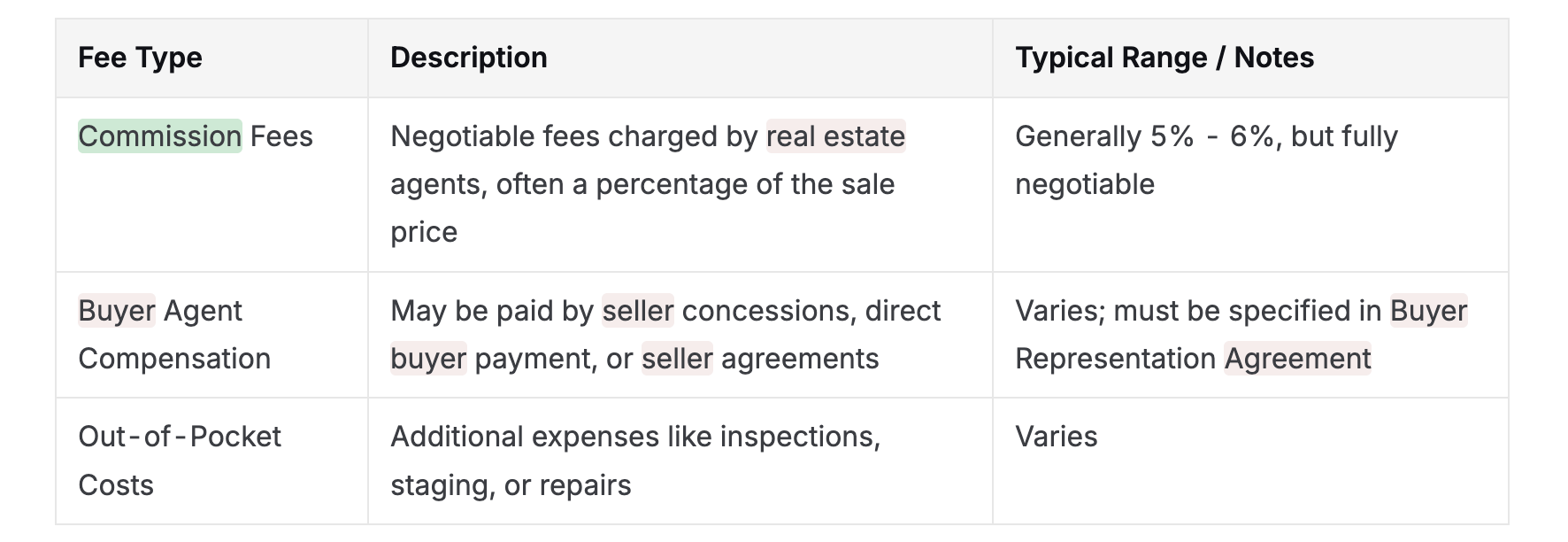
Clear understanding and documentation of these fees are indispensable under the new regulatory environment to avoid hidden costs.
Types of Agency Representation in Pennsylvania: What You Need to Know
Agency relationships remain foundational in Pennsylvania real estate but under recent regulations require written agreements and explicit disclosures.
Buyer Agency: Agent represents the buyer exclusively, with a formal Buyer Representation Agreement in place before property tours.
Seller Agency: Agent solely represents the seller, focusing on marketing and negotiating on the seller’s behalf.
Dual Agency: Agent represents both buyer and seller. This requires full disclosure and consent from all parties, with clear boundaries to manage conflicts of interest.
Designated Agency: Within the same brokerage, different agents represent the buyer and seller separately to avoid dual agency conflicts.
Understanding these distinctions and requiring written agreements jointly protects you and promotes a transparent, professional real estate experience.
The Importance of Exclusive Buyer Agency Agreements in Real Estate
Less than half of US homebuyers report having engaged a real estate licensee in exclusive buyer agency agreements. Redefining realtor relationships and responsibilities: The failure of state regulatory responses, 2003
What Questions Should You Ask a Pennsylvania Realtor Before Hiring?
Under the new standards and industry practices, be sure to ask these specific questions to fully evaluate your prospective agent's alignment with your needs:
Are you licensed and compliant with current Pennsylvania Real Estate Commission regulations?
What does your Buyer Representation Agreement require and include? Request a copy and review it carefully.
How do you handle commission negotiations and disclosures?
Can you explain the difference between dual agency and designated agency in your practice?
What is your experience negotiating in today’s market and protecting clients under these new regulations?
Can you provide references or client testimonials emphasizing your compliance and professionalism?
Which Credentials and Licensing Should Pennsylvania Agents Have?
Every agent must hold an active Pennsylvania real estate license, obtained by passing the state exam and meeting education requirements mandated by PREC. Membership in local boards and national associations such as NAR reflects ongoing commitment to ethical standards and professionalism. Agents affiliated with McAteer & Will Estates | Keller Williams are rigorously trained to comply with all current regulations and branding standards.
How Do You Evaluate Agent Experience and Local Pike County Expertise?
Experienced agents bring invaluable insight into the Pike County market, including neighborhood nuances and transaction complications specific to the region. Key evaluation criteria include:
Depth of local market transactions and volume handled
Familiarity with recent market changes and regulatory updates
Client feedback focusing on transparent communication and advocacy
Continuing education efforts and certifications
How Do Buyer, Seller, and Dual Agency Types Differ in PA?
With new regulations emphasizing written agreements and full disclosures, understanding agency roles is crucial:
Buyer Agency: Agent owes full fiduciary duties to the buyer, advocating exclusively on their behalf.
Seller Agency: Agent represents the seller's best interests, including marketing and price negotiations.
Dual Agency: Agent represents both parties with strict duty to remain impartial and requires written consent from all involved.
Designated Agency: Two agents from the same brokerage represent buyer and seller separately, reducing conflicts inherent in dual agency.
When Should You Choose a Buyer Agent Agreement in Pennsylvania?
It's essential to sign a Buyer Representation Agreement before touring any homes to formalize your agent relationship and clarify expectations. This ensures exclusive representation, transparent fee arrangements, and a foundation for proactive searching and negotiation.
What Legal Elements Should Be Clearly Included in a PA Buyer Agency Agreement?
Such agreements must carefully address legal protections including:
Agreement duration and renewal conditions
Exclusivity clauses outlining whether you may work with other agents
Termination clauses specifying how you may end the agreement
Detailed fee and compensation arrangements
These provisions uphold your rights and define clear responsibilities for your agent.
How Are Pennsylvania Real Estate Agent Fees Structured and What Should You Expect?
Agent fees are negotiated case-by-case and must be transparent in your agency agreements. Sellers may no longer be obligated to offer a cooperating commission to buyer agents through MLS. Buyers should anticipate discussing and agreeing in writing whether they or the seller will pay the buyer agent, or if alternative compensation arrangements apply.
What Is Included in Typical PA Buyer Agent Commission Fees?
Buyer agent commissions generally cover:
Detailed property searches tailored to buyer criteria
Expert negotiations aimed at securing favorable terms
Guidance through inspection, financing, and closing processes
Ensure these services are explicitly outlined in your Buyer Representation Agreement.
How Do Local Market Trends Influence Choosing a Real Estate Agent in Pike County and PA?
Agents well-versed in Pike County’s current market conditions — such as inventory levels, pricing trends, and average days on market — can better strategize and represent you. Look for agents who use up-to-date market data and have demonstrated adaptability amid regulatory and MLS changes.
What Are the Latest Pike County Real Estate Market Highlights for 2023?
Latest data shows:
Average home prices: Approximately $275,000, showing steady growth.
Sales activity: Competitive, with many homes selling quickly.
Buyer competition: Increased bidding wars highlight the need for skilled agent negotiation.
Choosing an agent familiar with these market dynamics is vital.
How Can Local Market Reports Help You Pick the Right PA Realtor?
Market reports containing recent sales, pricing, and neighborhood trends empower buyers and sellers to assess agent performance and strategy. Agents proficient in interpreting and leveraging market data provide measurable advantages in negotiations.
What Are the Best Practices to Find and Evaluate the Best Real Estate Agent in Pennsylvania?
Focus on an agent’s:
Local expertise and knowledge of Pike County and Pennsylvania markets.
Credentials, licensing, and adherence to evolving regulations.
Transparency around fees and representation agreements.
Reputation for ethical compliance and client advocacy.
Ability to communicate clearly and proactively, especially concerning recent regulatory changes.
Common FAQs About Pennsylvania Real Estate Agents, Fees, and Agreements
What factors affect real estate agent fees in Pennsylvania? Fees are now fully negotiable and depend on the services provided, property prices, and negotiated agreements.
How are agency agreements enforced legally? Written agreements like Buyer Representation Agreements are legally binding and must be honored under Pennsylvania law.
What if I’m unsatisfied with my agent? Most agreements include termination clauses that allow you to end the relationship under specified conditions.
When must I sign the Buyer Representation Agreement? Before touring any properties, whether physically or virtually.
Are commissions shown on MLS listings? No—the cooperative compensation information is no longer displayed, so compensation must be negotiated directly.
How Do Agent Fees Work and Who Pays Them in Pennsylvania Real Estate Transactions?
Fees typically derive from a negotiated percentage of the sale price, with sellers often paying commissions that may be shared with buyer agents. However, due to recent changes, buyers may be responsible for compensating their agents directly or may negotiate seller concessions to cover these fees. This must be clearly negotiated and documented in the Buyer Representation Agreement and purchase contracts. For comprehensive regional insights, please see our market report for 2026.

